
The punctuation of kudamaf is reduced to two marks: the pause cell, which closes the sentence, and the comma, which opens a subordinate clause. Nothing else exists. There are no quotation marks, asterisks, parentheses, dashes, semicolons; there is no mark for direct speech nor one for citation. Everything that on Earth’s writing systems relies on a forest of marks is here entrusted to syntax or lexicon.
The pause cell
All eighteen letters occupy at least one of the cell’s three horizontal lines. A cell without horizontals therefore cannot be mistaken for a letter: it is the system’s only free niche, and it is there that the pause has been placed.
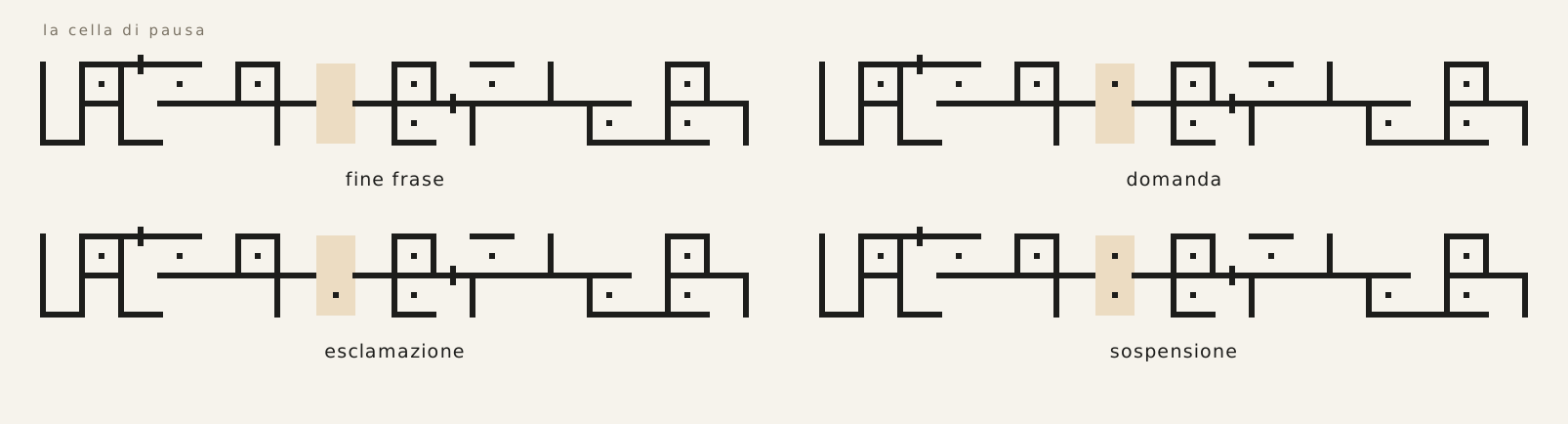
The highlighted cell is the pause. The four varieties are distinguished only by the dots.
| end of sentence | empty cell |
| question | one dot at the top, as in e |
| exclamation | one dot at the bottom, as in u |
| suspension | two dots, as in a |
The dots are borrowed from the vowels, with the same arrangement: the reader learns no new marks, but recognizes in a cell without lines the position of a dot they already know.
The pause is, in every respect, a cell of the tape and behaves like the others: it counts toward the measure of the line and can fall in any position, including the last.
The comma
The comma is the only mark that steps outside the band of letters. It marks the entry into a subordinate clause and is drawn as a dash one cell long, placed just outside the tape and hung from a short stem that starts at the edge of the band.
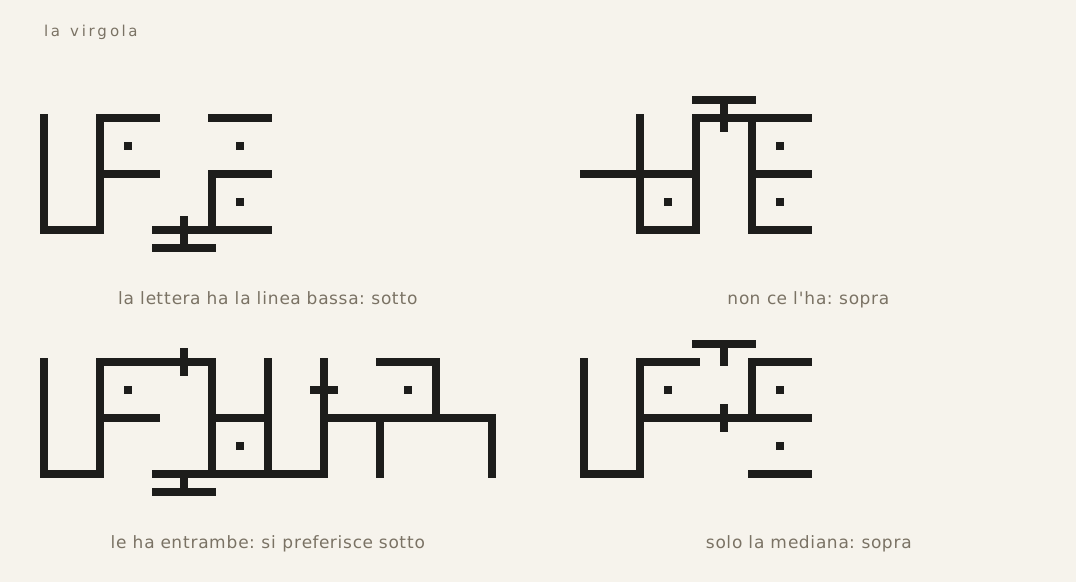
The comma sits below if the letter has a low line, above otherwise: this way it always stays anchored to the tape.
It has no levels and no direction: it does not say whether one descends or rises, it only says that a subordinate clause begins here. The side is not conventional but dictated by the letter it rests on — below if that letter has a low line, above if it does not — because the mark must touch the tape and not remain suspended. The word-initial stroke, if present, stays in its own place on the letter.
Entering and exiting
The subordinate clause opens with the comma on its first word, and the main clause resumes with another comma on the word where it re-enters. Two commas in a row, on two consecutive words, indicate that the second subordinate clause is nested inside the first.
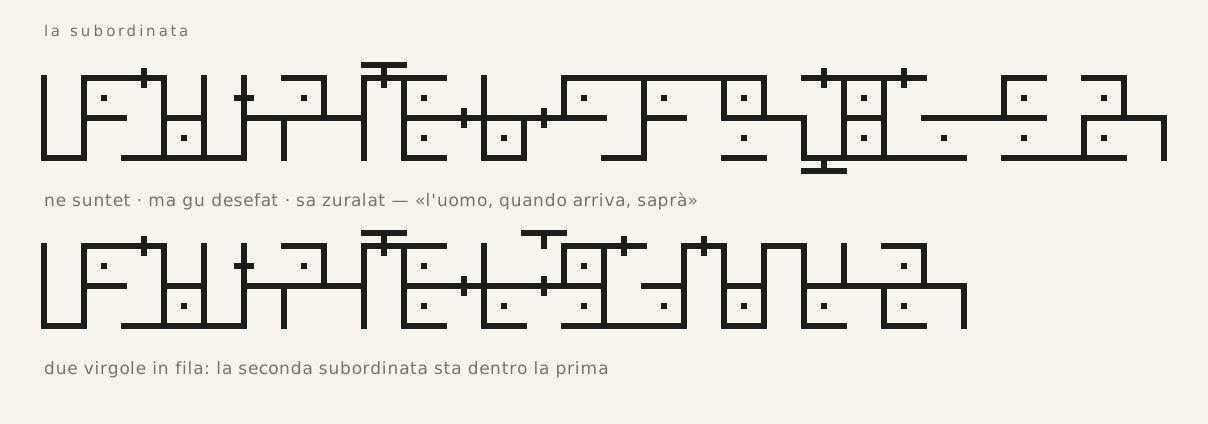
Above: entering and exiting a subordinate clause. Below: one subordinate clause nested inside another.
A line that begins while the subordinate clause is still open carries the comma on its own first letter: the arrangement is restated at every line, like the clef at every musical staff.
Direct speech and citation
Direct speech has no marks because it needs none: it is a subordinate clause governed by the verb of saying, alnerat, and the comma is enough to delimit it.
The citation of a word is entrusted to the lexicon, not to graphics: one prefixes a noun that classifies what follows — avamed word, dardez name, umamuz title, shugeb phrase.
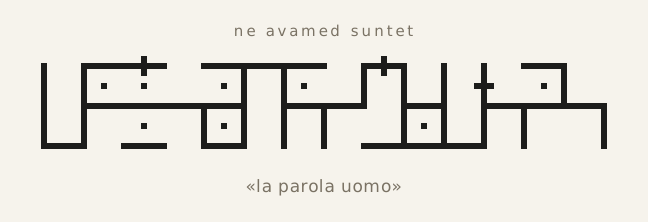
No mark: it is the word avamed that tells us suntet is to be taken as a word and not as a man.
The absence of quotation marks is consistent with the rest of the pazan. A mark saying “what follows should not be understood as usual” would reintroduce into the tape that very double reading which the language spent centuries shedding.